Every imaging function. One governed system.
Sites are productive on day one.
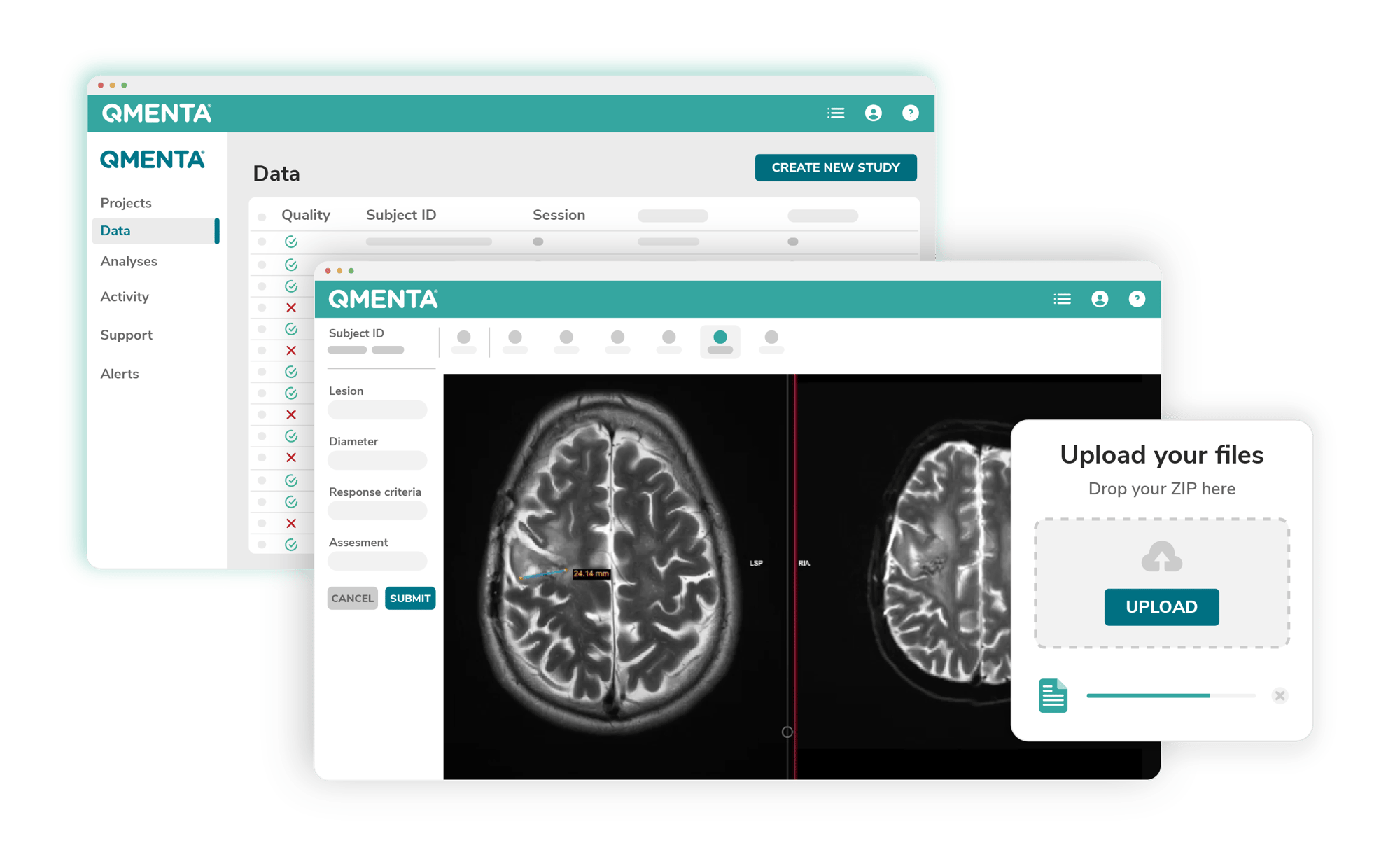
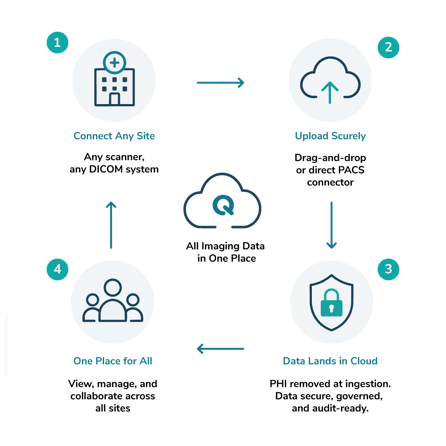
No IT projects, no VPN setup, no hard drives in the mail. Cloud-based upload from any site, any scanner via drag-and-drop for coordinators or direct PACS connector for sites. Multi-site imaging data lands in one place without the setup burden that typically delays the first scan by weeks.
Why it matters
Every week of setup delay before the first scan is a week lost from your analysis window. Sites that can upload on day one mean the trial starts when it's supposed to.
+Vendor-neutral: GE HealthCare, Siemens Healthineers, Philips, Canon, United Imaging, any DICOM system
+Automated PHI removal at point of ingestion, before data enters the platform
+GCP, AWS, or Azure depending on your security and procurement requirements
Protocol deviations caught within minutes, while the rescan window is still open.
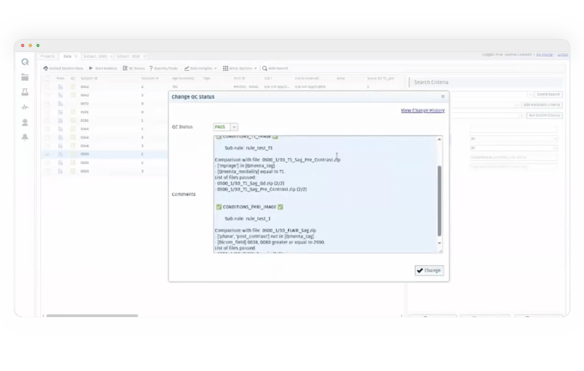
This is the single highest-value operational change most sponsors experience. Automated image and protocol QC flags deviations immediately after upload, not weeks later at central review when it is too late to recover the data.
Why it matters
A deviation caught the same day can be recovered with a rescan. A deviation caught at central review is a permanent data loss, and a threat to your primary endpoint.
+Automated image-level and protocol-level QC on every upload
+Deviations flagged within minutes, with site-level notification and a clear remediation path
+Longitudinal monitoring: protocol drift detected across sites over time, not just per upload
Unified data from day one, regardless of scanner manufacturer.
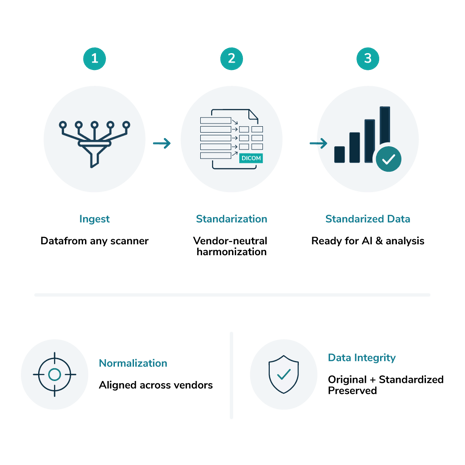
The easiest way to handle cross-vendor variability is to prevent it early. We help align scanner protocols before scanning starts, then automatically standardize data structures across manufacturers, field strengths, and acquisition protocols upon upload—before data ever reaches a scientist or model.
Why it matters
Inconsistent settings and chaotic vendor formats create downstream friction and invite regulatory scrutiny. Standardizing setup and data structures upfront protects your endpoints without altering your underlying images.
+Upfront protocol alignment across all major scanner vendors and field strengths
+Automated data structure standardization applied seamlessly on upload
+Full data integrity with both original and standardized files fully preserved
Validated AI from hours, not months.
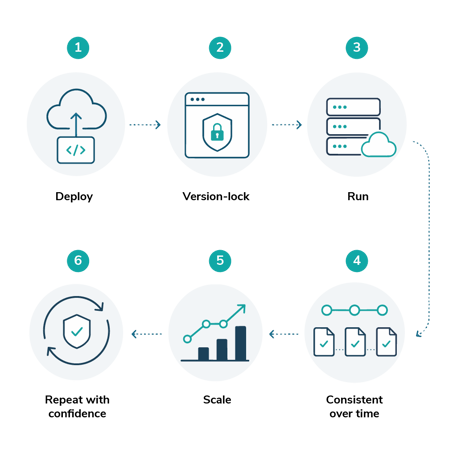
A governed cloud environment to deploy, run, and scale validated AI algorithms: your own, QMENTA's, or third-party. Every model is version-locked, audit-trailed, and reproducible. The model applied at baseline is the same model applied at every subsequent timepoint.
Why it matters
A model that changes between timepoints introduces unquantifiable variance into your longitudinal biomarker measurements. Regulators will ask, and the answer needs to be version-controlled from day one, not reconstructed at submission.
+50+ validated imaging AI workflows and biomarker tools available immediately
+Bring your own algorithms or deploy third-party tools in the same environment
+Version-locked and reproducible: every model run is auditable from the submission side
Sites, CROs, sponsors, and radiologists. One dataset, real time.
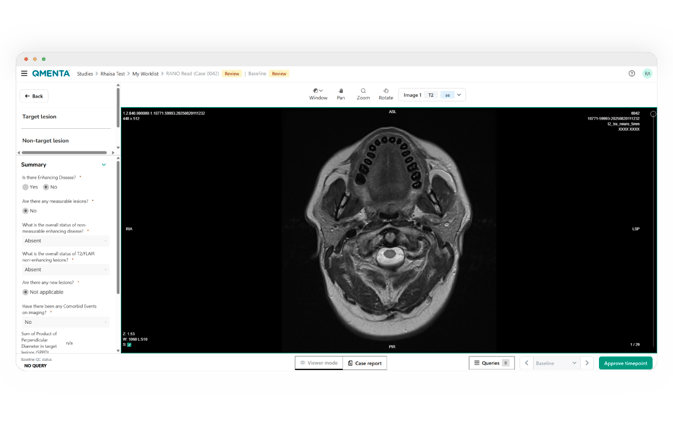
All stakeholders work on the same data in real time through a zero-footprint browser viewer with approximately one-second load times.
Why it matters
Fragmented reading workflows, multiple versions of data, and disconnected adjudication records create audit gaps that surface at closeout, under the worst possible time pressure.
+Zero-footprint browser viewer, approximately 1-second load times, no local installation
+Dedicated radiologist worklists with structured double-read and adjudication workflows
+Role-based access: sites see only their data; sponsors and CROs see everything; radiologists see their worklist
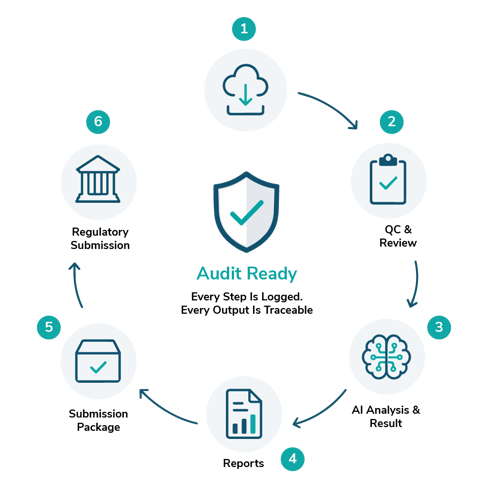
The submission package is built throughout the trial, not assembled under pressure at the end.
The full chain of custody from acquisition to submission lives in one auditable system. FDA 21 CFR Part 11, HIPAA, GDPR, and GxP compliance are built in. When a regulator asks a question, the answer is already logged.
Why it matters
Submission packages assembled at closeout from disconnected systems typically take months and introduce reconciliation errors. When the audit trail has been building from day one, closeout is a report run, not a project.
+Automated database reconciliation at closeout: months of manual work compressed
+Closeout documentation generated from the running audit trail, not assembled from scattered sources
+Full chain of custody from first scan to regulatory submission in one queryable system