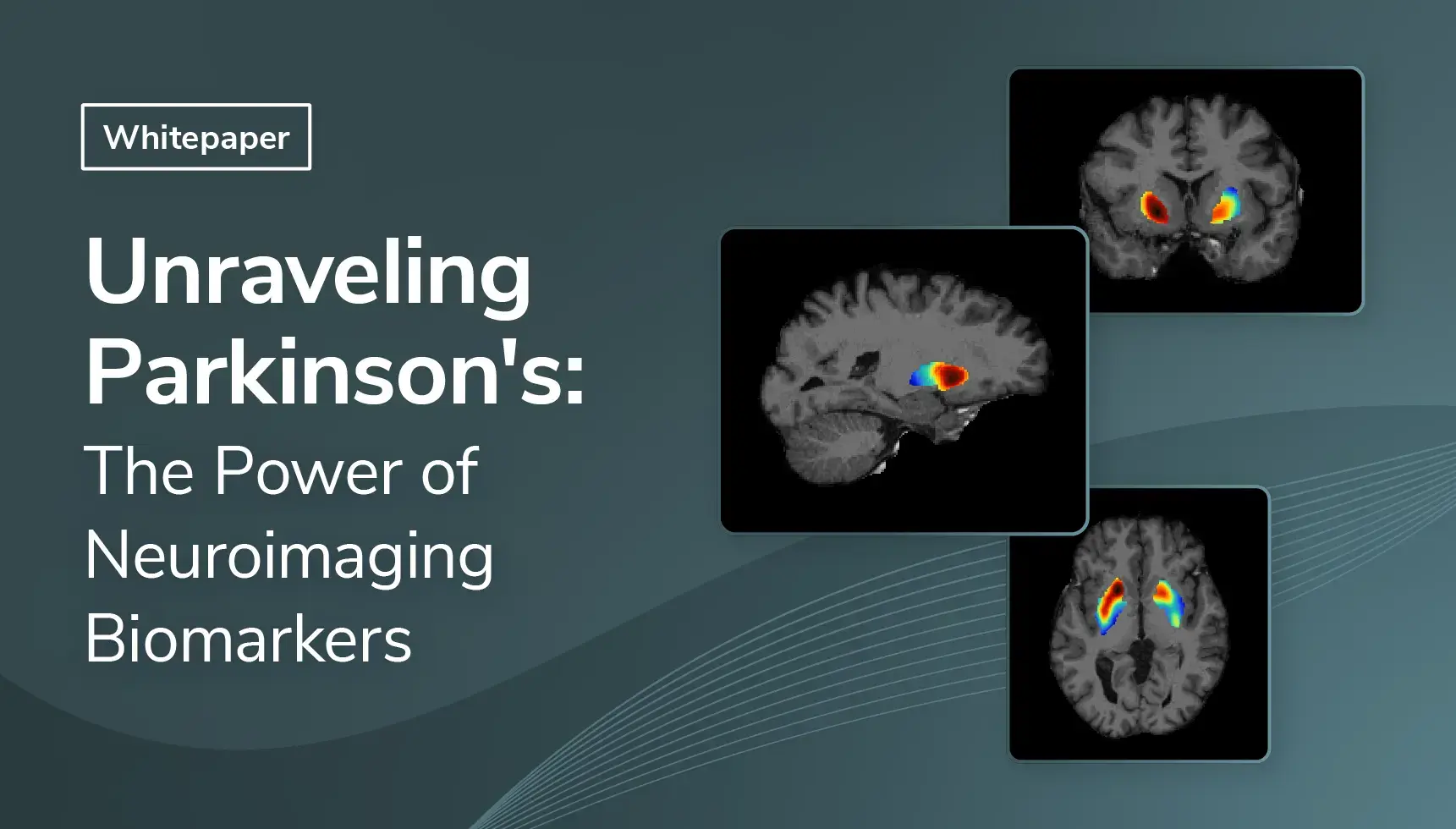
Parkinson's Disease (PD) is a complex and progressive neurodegenerative disorder that affects millions of people worldwide. Early detection, accurate diagnosis, and monitoring disease progression are critical to advancing research and improving patient outcomes. At QMENTA, we are dedicated to empowering researchers with the tools they need to revolutionize Parkinson’s research through advanced neuroimaging techniques. Our cloud-based platform provides seamless access to powerful technologies that can transform the way PD is studied, diagnosed, and treated.
QMENTA’s Imaging Hub integrates state-of-the-art MRI and PET imaging techniques, enabling researchers to explore key biomarkers such as iron accumulation in the substantia nigra, Dopamine metabolism, and white matter microstructural changes—all essential for early detection and differentiation of PD from other parkinsonian syndromes like Multiple System Atrophy (MSA) and Progressive Supranuclear Palsy (PSP). Advanced MRI acquisitions, such as Quantitative Susceptibility Mapping (QSM), Diffusion Tensor Imaging (DTI), and functional MRI (fMRI) provide detailed insights into both the structural and functional changes in the brain, helping researchers identify disease-related changes even before clinical symptoms manifest.
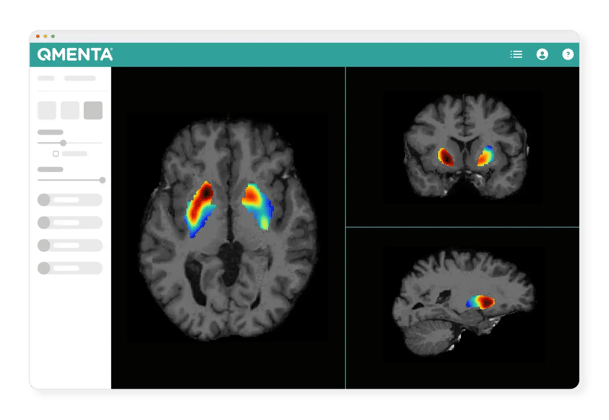
Our platform’s easy-to-use interface allows researchers to process, analyze, and collaborate on vast amounts of neuroimaging data, streamlining workflows and ensuring consistent results. With QMENTA, you can leverage cutting-edge MRI and molecular imaging modalities to study cognitive deficits, motor symptoms, and functional connectivity in PD patients. Moreover, the platform’s collaborative features enable institutions and research teams across the globe to work together effortlessly, accelerating the pace of discovery.
To dive deeper into the potential of neuroimaging in Parkinson's research, explore our latest comprehensive review, which provides a detailed overview of the state-of-the-art techniques driving innovation in this field. Let QMENTA be your partner in advancing Parkinson's research and shaping the future of neurodegenerative disease understanding.
Frequently Asked Questions
What neuroimaging biomarkers are used in Parkinson's disease research?
Several MRI and PET-based biomarkers are used to study Parkinson's disease. Quantitative Susceptibility Mapping (QSM) detects iron accumulation in the substantia nigra — a key pathological feature of PD detectable on MRI before clinical symptoms manifest. Diffusion Tensor Imaging (DTI) reveals white matter microstructural changes in the nigrostriatal pathways. Neuromelanin-sensitive MRI visualises dopaminergic neuron degeneration in the substantia nigra. PET imaging with dopamine transporter tracers (e.g. DAT-SPECT) quantifies dopamine metabolism and is used in both diagnosis and disease progression monitoring. Together, these modalities provide a comprehensive in vivo picture of PD pathophysiology.
How can MRI distinguish Parkinson's disease from similar conditions?
Parkinson's disease must be differentiated from atypical parkinsonian syndromes including Multiple System Atrophy (MSA) and Progressive Supranuclear Palsy (PSP), which share overlapping clinical features but have distinct structural brain signatures on MRI. QSM and iron-sensitive MRI identify patterns of substantia nigra iron deposition characteristic of PD rather than MSA or PSP. Diffusion-based MRI can reveal cerebellar or pontine atrophy patterns more characteristic of MSA. Advanced MRI biomarkers therefore reduce diagnostic ambiguity and enable more accurate patient stratification for clinical trials.
What is the substantia nigra and why is it important in Parkinson's disease imaging?
The substantia nigra is a region in the midbrain that plays a central role in Parkinson's disease pathology. It contains dopaminergic neurons that progressively degenerate in PD, reducing dopamine production and causing the characteristic motor symptoms of the disease. Iron accumulates in the substantia nigra as neurodegeneration progresses, making it detectable on susceptibility-sensitive MRI sequences before clinical symptoms appear. Measuring the volume, iron content, and neuromelanin signal of the substantia nigra provides objective, quantitative biomarkers of disease onset and progression.
How does functional MRI (fMRI) contribute to Parkinson's disease research?
Functional MRI measures changes in blood oxygenation as a proxy for neural activity, enabling researchers to map the functional connectivity networks that are disrupted in Parkinson's disease. Studies using fMRI have identified alterations in corticobasal ganglia circuits and default mode network connectivity in PD patients compared to healthy controls. These functional connectivity signatures can track disease progression and potentially measure treatment response, complementing the structural biomarkers provided by conventional and quantitative MRI.
How does QMENTA support Parkinson's disease neuroimaging research?
QMENTA's Imaging Hub provides a cloud-native platform that integrates MRI and PET imaging data management, AI-powered biomarker analysis (including QSM, DTI, and volumetric tools), and multi-site collaboration infrastructure in a single compliant system. Researchers can access validated Parkinson's disease biomarker algorithms through QMENTA's biomarker catalogue, process large neuroimaging datasets without site-level software installation, and collaborate across institutions while maintaining full regulatory compliance. The platform is designed to reduce the logistical burden of multi-site Parkinson's imaging studies so researchers can focus on scientific discovery.