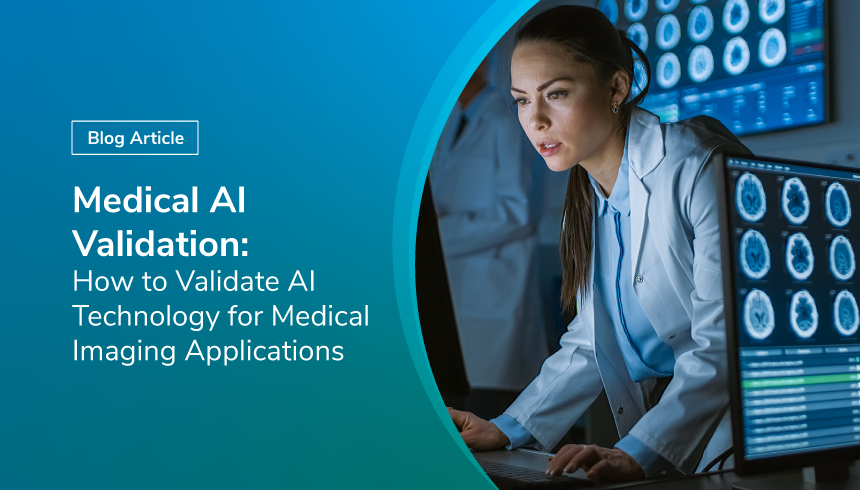
AI offers a tremendous field of applications, including supporting the analysis of medical imaging in radiology workflows with unprecedented efficiency and accuracy. These technologies excel at recognizing complex patterns that might escape human observation, enabling early-stage disease detection that can be life-saving. AI systems deliver reproducible results, minimizing human errors that can occur due to fatigue or subjective interpretation.
These tools also offer significant time and cost-effectiveness, allowing radiologists to focus on complex cases while AI handles routine screening tasks.
Benefits of AI in Medical Imaging Workflows
AI offers a tremendous field of applications, including supporting the analysis of medical images in radiology workflows with unprecedented efficiency and accuracy. These technologies excel at recognizing complex patterns that might escape human observation, enabling early-stage disease detection that can be life-saving. AI systems deliver reproducible results, minimizing human errors that can occur due to fatigue or subjective interpretation.
These tools also offer significant time and cost-effectiveness, allowing radiologists to focus on complex cases while AI handles routine screening tasks.
Medical AI Validation Challenges and Requirements
Any AI technology needs rigorous validation before it gets integrated into a clinical workflow, and that validation must meet both clinical research standards and regulatory requirements.
Many imaging-based AI algorithms aiming to reach the radiologist's workbench quickly succumb to performance loss in real-world settings. This raises concerns for generalizability, misdiagnosis, and ultimately safety. Any AI technology needs rigorous validation before it gets integrated into a clinical workflow, and that validation must meet both clinical research standards and regulatory requirements.
Medical AI validation presents several interconnected challenges:
Regulatory Pathway Complexity: Achieving FDA clearance through 510(k) or De Novo pathways, or obtaining CE marking for European markets, requires extensive documentation of algorithm performance. These regulatory submissions demand solid validation data, including sensitivity and specificity metrics across diverse patient populations, clear definitions of intended use, and evidence of clinical utility beyond just technical performance.
Clinical Validation Protocol Design: Proper medical AI validation requires well-designed reader studies with multiple radiologists interpreting both AI-assisted and unassisted cases. Establishing ground truth through expert consensus or histopathological confirmation takes significant resources.
Calculating inter-rater reliability, determining appropriate sample sizes for statistical power, and demonstrating non-inferiority or superiority to current standards all require careful protocol development and often IRB approval for prospective studies.
Data Privacy and Multi-Site Coordination: Medical images contain sensitive patient information that must be protected across potentially multiple validation sites. Ensuring HIPAA and GDPR compliance while coordinating multi-center clinical trials adds complexity to an already demanding process.
Infrastructure and Dataset Requirements: AI validation medical imaging workflows require processing thousands of images with substantial computational power. Beyond technical infrastructure, acquiring diverse, well-annotated datasets representing various scanner manufacturers, imaging protocols, and patient demographics is extraordinarily expensive and time-consuming.
Model Drift and Continuous Monitoring: AI models can generate false outputs or "hallucinate" findings, especially when encountering data that differs from their training set. Post-market surveillance becomes critical, yet many institutions lack systems for ongoing performance monitoring as models encounter real-world variability.
How Modern Imaging Platforms Support Medical AI Validation
Cloud-based platforms designed specifically for medical imaging AI can address many of these infrastructure and workflow challenges. They complement rather than replace the fundamental work of rigorous clinical validation.
The QMENTA Imaging Hub provides HIPAA-compliant infrastructure that automatically de-identifies patient data during upload, simplifying multi-site coordination for clinical trials.
The QMENTA Imaging Hub provides HIPAA-compliant infrastructure that automatically de-identifies patient data during upload, simplifying multi-site coordination for clinical trials. Its extensive, curated image warehouse can supplement internal datasets, helping researchers achieve the demographic and technical diversity needed for strong validation studies.
Processing thousands of images to generate the performance metrics required for regulatory submissions creates substantial computational demands. QMENTA's cloud-based scalability eliminates hardware bottlenecks. Research teams can run sensitivity and specificity analyses across large cohorts without investing in local computing clusters.
The platform supports the iterative nature of clinical validation. Researchers can deploy containerized algorithms via Docker, execute reader studies through web-based interfaces accessible to distributed radiologist reviewers, and utilize built-in visualization tools for performance analysis. This infrastructure facilitates the multiple validation rounds typically required before regulatory submission.
QMENTA's continuous monitoring capabilities support post-market surveillance requirements by detecting model drift over time.
QMENTA's continuous monitoring capabilities support post-market surveillance requirements by detecting model drift over time. As algorithms encounter diverse real-world cases post-deployment, the platform can flag performance degradation, which regulatory bodies expect for maintaining clearance.
Clinical Deployment Requirements for Validated Medical AI
Platforms like QMENTA work best as part of a comprehensive validation strategy that includes:
- Early engagement with regulatory bodies to determine the appropriate clearance pathway
- Collaboration with biostatisticians to design adequately powered validation studies
- IRB-approved protocols for prospective data collection
- Structured reader studies with predefined performance endpoints
- Plans for addressing algorithm updates and continuous validation
Medical AI validation remains a complex, multi-year process requiring clinical research expertise, regulatory knowledge, and substantial resources.
Medical AI validation remains a complex, multi-year process requiring clinical research expertise, regulatory knowledge, and substantial resources. The right infrastructure platform reduces technical barriers and accelerates timelines, but it cannot replace the rigorous clinical validation protocols that ensure patient safety and regulatory compliance.
By consolidating data management, computational resources, and compliance tools, modern platforms transform medical AI validation from an insurmountable infrastructure challenge into a manageable clinical research endeavor.
Frequently Asked Questions
What is medical AI validation in medical imaging?
Medical AI validation is the process of proving that an imaging AI system performs reliably before it enters a clinical workflow. Validation must satisfy both clinical research standards and regulatory requirements — technical performance benchmarks alone are not sufficient.
Why is medical AI validation so difficult?
Several challenges compound each other: regulatory pathway complexity, rigorous clinical validation protocol design, privacy and multi-site coordination requirements, large dataset and infrastructure demands, and the ongoing need to monitor for model drift after deployment.
What regulatory evidence is required for medical imaging AI?
Regulatory submissions require extensive algorithm performance documentation, including sensitivity and specificity data across diverse patient populations, clearly defined intended use statements, and evidence of clinical utility that goes beyond technical accuracy measures alone.
Why do multi-site studies matter for AI validation in medical imaging?
Validation studies need diverse datasets spanning different scanner manufacturers, imaging protocols, and patient demographics. Multi-site coordination is what makes that diversity achievable — but it also introduces privacy, logistics, and compliance complexity that must be actively managed.
How can cloud-based platforms support medical AI validation?
Cloud-based imaging platforms can reduce infrastructure bottlenecks by supporting de-identification at the point of upload, enabling large-scale image processing, facilitating distributed reader studies, and providing the monitoring infrastructure needed to track model performance over time.
Can an imaging platform replace formal clinical validation?
No. Platforms complement rigorous clinical validation but do not replace it. Teams still need sound study design, regulatory planning, reader studies, IRB-approved protocols where applicable, and structured performance endpoints — a platform supports that work but cannot substitute for it.
Why is post-market surveillance important for medical AI systems?
AI models can lose performance when exposed to real-world variability that differs from their training data. Ongoing monitoring is essential for detecting model drift early and meeting the post-deployment surveillance expectations that regulators increasingly require.
Explore the QMENTA Imaging Hub
See how QMENTA supports validation workflows for medical imaging AI with de-identification, scalable processing, reader studies, and post-market monitoring infrastructure.
Explore the Imaging Hub
About the author: Paulo Rodrigues, PhD, CTO and Co-Founder of QMENTA
Paulo Rodrigues leads QMENTA's technology strategy for cloud-based medical imaging and AI infrastructure.